Sound limiters · Ibiza and the Balearics
Sale, installation, certification and official sealing of Ecudap limiters for bars, restaurants, shops, hotels and clubs.
Official approval course completed directly with the manufacturer. Legal compliance with the municipal noise ordinances of Eivissa, Sant Antoni, Santa Eulàlia, Palma, Calvià, Maó and Ciutadella.
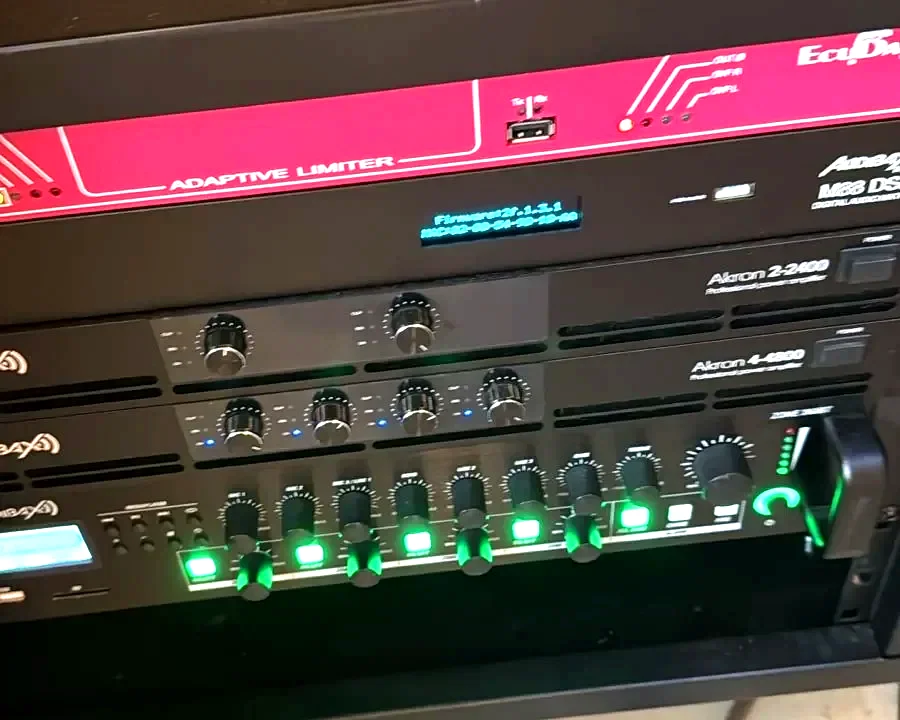
Why your venue needs a limiter
In the Balearics, any venue with a music licence must install a certified sound limiter. The limiter automatically reduces audio output when the decibel level exceeds the legal threshold for that zone.
Required by law
Bars, restaurants with live music, shops with background music, hotels, beach clubs, clubs and any venue with an M-3 music licence must have a certified, sealed limiter operating at all times.
Sealed certification
Once installed and configured, the limiter must be physically sealed by an authorised technician. Tampering with or breaking the seal is a serious offence that can lead to the venue being closed.
Consequences without one
Penalties vary by municipality. The scale under Law 1/2007 reaches up to €300,000 for very serious offences; Formentera, however, sets its own caps of €750, €1,500 and €3,000. But the fine isn't the point: not having a limiter when required is grounds for the precautionary closure of the venue before the case is resolved.
Why Ecudap
Ecudap is the leading Spanish manufacturer of certified sound limiters. The EQD 50SR family is accepted by practically every municipality in Spain and is unaffected by ambient noise — it only regulates the venue's own audio output.
Gama Ecudap
Five models cover everything from small bars to multi-zone clubs. The choice depends on the size of the venue, the number of audio zones and integration needs.

EQD 50SR XBasis
Small bars, shops, single-zone venues
- 1 external microphone
- dB(A) and dB(C) measurement · IEC 61672 type II
- USB port for configuration
- RS-485 serial port for external devices
- Optional Ethernet module
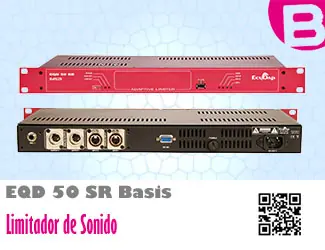
EQD 50SR Basis
Medium restaurants, single-zone venues
- Same measurement base as XBasis
- 1 microphone · USB · serial port
- Standard configuration version
- Suitable for most single-zone applications

EQD 50SR Watchdog Analogue
Clubs, restaurants with live music, multi-zone venues
- 2 microphones (2-zone monitoring)
- USB-configurable spectral limiting (ECUDAP ToolBox)
- RS-232 · RS-485 · Ethernet
- Up to 10 EQD Displays · cable up to 300m
- Optional GPRS / WIFI / SMS module
- Independent readout per display

EQD 50SR Watchdog Digital
Integration with wider control systems
- Same base as Watchdog Analogue
- Up to 5 EQD Displays (vs 10 on the Analogue)
- Digital output for system integration
- USB · RS-232 · RS-485 · Ethernet
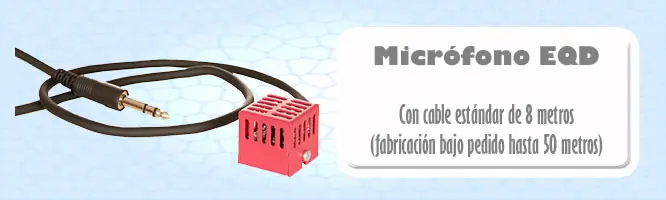
EQD Microphone
Sensor compatible with the whole range
- Professional measurement sensor
- 8m cable by default (longer on request)
- Compatible with XBasis, Basis and Watchdog
End-to-end service · five points
We don't just sell hardware — we hand over the venue legally certified, operational and ready to pass any inspection.
Equipment sale
Supply of the right Ecudap model for your venue and use. We don't push the most expensive model — we recommend the one suited to the legal threshold and the number of zones.
Installation and configuration
Physical installation, wiring, microphone placement and full configuration with ECUDAP ToolBox. We coordinate with the venue's existing electrical and audio infrastructure.
Official certification and sealing
As an approved installer, we issue the official certificate accepted by every Balearic town council and seal the equipment. It includes a calibration record and a limit-configuration document for the council.
Periodic maintenance
Annual recalibration recommended. Includes verification of microphones, displays and configuration. We coordinate with the venue's opening calendar to minimise downtime.
Municipal-regulation advice
If your venue doesn't yet have a music licence or is being inspected, we help interpret the local ordinance and prepare documentation. We don't replace a lawyer — we cover the technical-administrative side.
Typical process
From the first call to the sealed certificate, the process usually takes 5–10 working days depending on stock availability.
- Initial call — you describe the venue, type of activity, music licence (if you have one) and location. We send preliminary advice by email.
- Free technical visit — measurement of the space, identification of audio sources and zones, assessment of cable runs. Same-day quote in most cases.
- Proposal and decision — a closed quote covering equipment, installation, certification and the first year of maintenance. Valid for 14 days.
- Installation — typically 1 working day for single-zone, 2–3 days for multi-zone Watchdog setups.
- Configuration with council limits — the dB(A) thresholds are set according to your municipality's ordinance for your type of venue.
- Sealed certification — official Ecudap certificate, sealed equipment, ready for any inspection.
- Follow-up — annual maintenance reminder. Available for issues throughout the year.
Frequently asked questions
Do I really need a sound limiter in my venue?
If your venue has a music licence (any class M) and is in the Balearics, yes. Bars, restaurants with background music, hotels with poolside music, shops, beach clubs, clubs — all must have one. Even venues with only background music are technically required to, although enforcement varies by municipality.
What happens if a municipal inspection finds the venue without a limiter or with a broken seal?
Penalties vary by municipality. The scale under Law 1/2007 reaches up to €300,000 for very serious offences; Formentera, however, sets its own caps of €750, €1,500 and €3,000. But the fine isn't the point: not having a limiter when required is grounds for the precautionary closure of the venue before the case is resolved.
How much does it cost?
The limiter isn't sold on its own: it is delivered installed, calibrated, sealed and certified, because art. 23.3 requires this to be done by a company authorised by the manufacturer. The entry package includes the acoustic study (€600), the installation, calibration and certification (€400), the Ecudap equipment sized for your venue, and the first year of the maintenance contract included. The equipment is quoted according to zones, displays and wiring: ask us for the free audit and we give it to you in writing within 48 hours.
How long does installation take?
For single-zone Basis or XBasis, typically 1 working day. For multi-zone Watchdog setups with several displays, 2–3 working days. The availability of the specific model affects the start date — we usually keep XBasis and Basis in stock and order Watchdogs on demand.
Does it need periodic maintenance?
Annual recalibration is strongly recommended and often required by the council for the certificate to remain valid. Maintenance checks microphones, displays, the configured limits and the integrity of the seal.
Does it comply with the ordinances of Ibiza, Palma and Calvià?
Yes. Ecudap limiters are accepted in every Balearic municipality. The specific dB(A) thresholds are configured according to your municipality's ordinance and venue type (M-1 background, M-2 amplified, M-3 live music).
Can I import a limiter from elsewhere and have you just install it?
No. Certification requires the equipment to come through an authorised distribution channel. We can't certify equipment of unknown origin or used limiters that weren't previously de-installed through the authorised channel.
Do you work in Mallorca and Menorca?
Yes. Travel costs are added to the quote for venues outside Ibiza, but the full service (sale, installation, certification, maintenance) is identical. We have carried out installations in Palma, Calvià, Sóller, Maó and Ciutadella.
Ready to certify your venue?
The first step is a free technical visit. We measure the space, identify the right Ecudap model and give you a closed quote covering equipment, installation, certification and the first year of maintenance.
DecibelSea installs and certifies. MiIA monitors it and alerts you.
The ordinance requires you to install a device that records your sound levels, makes you responsible for keeping it working, and lets the council extract that history whenever it wants.
We install it, calibrate it, seal it and certify it. And then we read that record before they do: continuous remote monitoring, an alert before the threshold is exceeded, and a monthly compliance report.
See MiIA's continuous monitoring →